 TG
TGWhy go to Cambodia: Angkor, islands and prices
The largest temple complex in the world, quiet islands in the south and prices below the neighbours. What to see and how much time to allow.
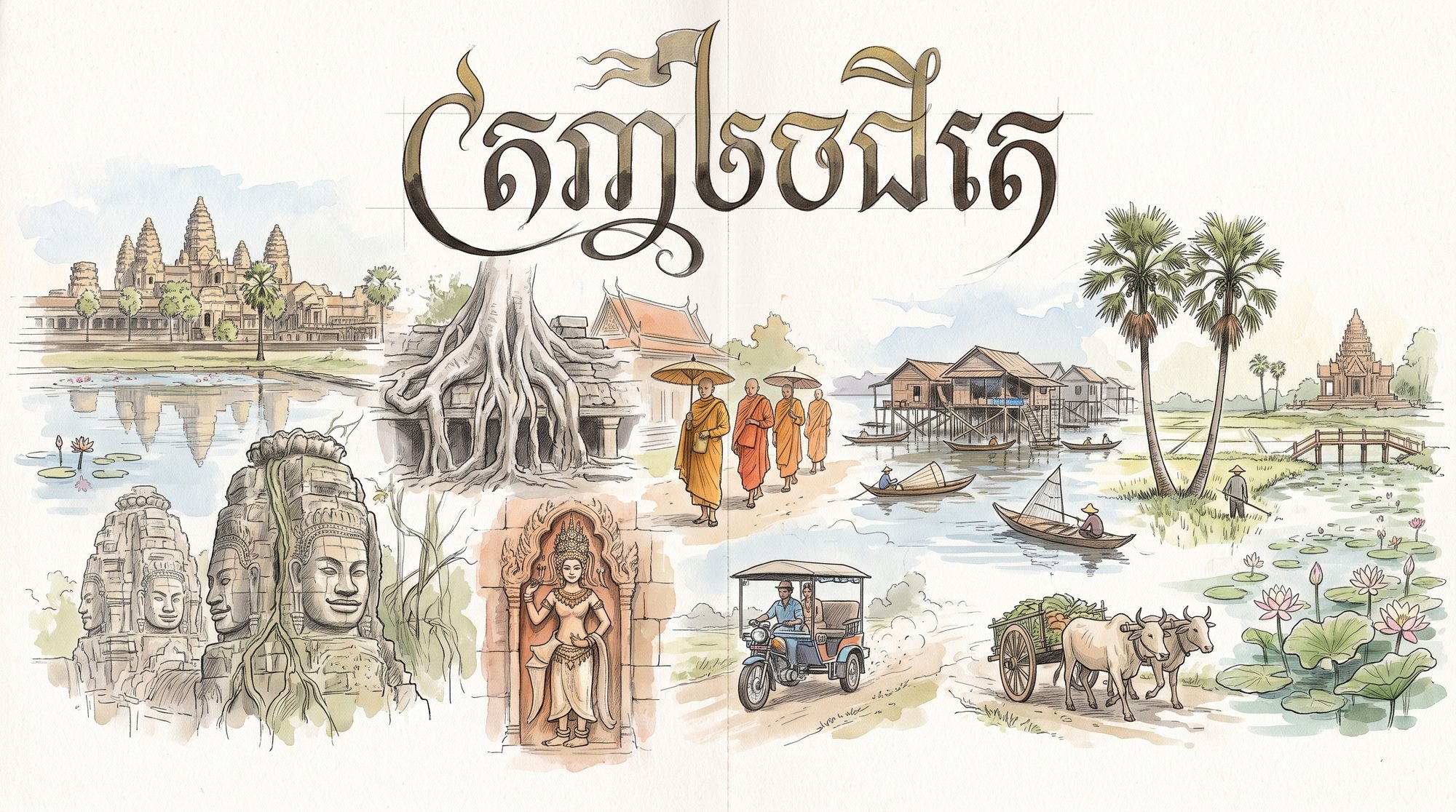
People come to Cambodia first of all for Angkor, and that is fair: nothing else of that scale exists. But the country does not end with the temples — there are islands in the south, colonial quarters in the capital, and prices below neighbouring Thailand and Vietnam.
Angkor
It is not one temple but a city of about 400 km² with hundreds of structures from the 9th to the 15th century. Angkor Wat is the famous one, Bayon has the stone faces, Ta Prohm is the one wrapped in tree roots. Seeing it usually takes two or three days.
- Tickets come for 1, 3 or 7 days — the three-day pass can be spread over a week
- People arrive at Angkor Wat before dawn: sunrise is the busiest hour of the day
- The distant temples — Banteay Srei, Beng Mealea — are nearly empty and need a separate trip
Phnom Penh
The capital sits where two rivers meet: the Royal Palace, the riverside, the French quarters. It is also home to the Tuol Sleng museum and the Choeung Ek killing fields — a heavy but important part of the country’s history worth reading about beforehand.
Islands and the coast
Koh Rong and Koh Rong Samloem are what many people come back for: white sand, clear water, minimal infrastructure. Kep and Kampot in the south are about seafood, pepper plantations and a slow pace.
Prices
Cambodia is noticeably cheaper than its neighbours: accommodation, food and transport cost less than in Thailand. Both US dollars and local riel circulate — small change comes back in riel.
How much time to allow
- Three or four days — Siem Reap and Angkor
- A week — Angkor plus Phnom Penh or the coast
- Ten days or more — temples, capital and islands without rushing
Cambodia is often combined with Vietnam or Thailand: the flights are short and cheap. All Russian citizens need a visa — we arrange the e-visa online before departure.