 TG
TGWhy go to South Korea: cities, food and mountains side by side
Seoul, Busan and Jeju, food worth the flight on its own, and mountains half an hour from the metro. What to see and how long to stay.
Korea is convenient because everything is close and everything works: high-speed trains, a metro signed in English, shops open around the clock. In a week you cover the city and the countryside without being worn down by logistics.
Seoul
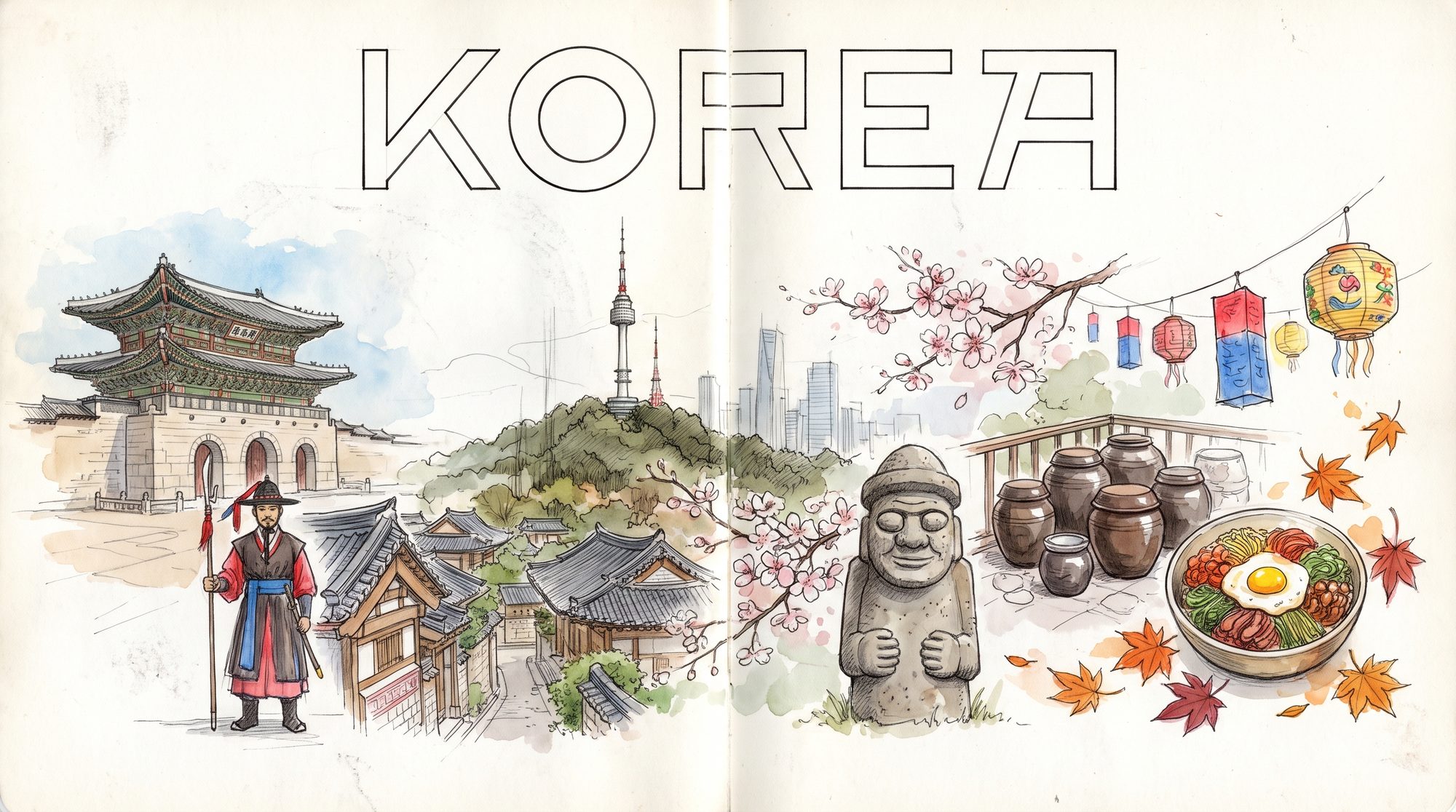
Joseon-era palaces and glass towers within one metro ride of each other. Bukchon with its traditional hanok houses, Gwangjang market with street food, Myeongdong for cosmetics, Hongdae for music and students. Allow three or four days for the city.
Busan
The second largest city, and completely different in character: the sea, Haeundae beach, the Jagalchi fish market, the colourful Gamcheon village on the hillside. Two and a half hours from Seoul on the KTX.
Jeju
A volcanic island in the south: the Seongsan crater, waterfalls, black rocks and coastal trails. A beach destination in summer, a hiking one in spring and autumn.
Food
Korean food is a reason to travel on its own. Barbecue grilled at your table, soups, kimchi in dozens of versions, street food at the markets. Portions are large, and the side dishes come free and get refilled on request.
- Barbecue places often have a two-portion minimum — harder to order alone
- Spice levels are not always adjustable: ask in advance
- Cafes stay open late, and convenience stores are everywhere and serve hot food
Mountains and parks
Bukhansan starts inside Seoul itself — you can reach the trailhead by metro. Seoraksan in the east is the country’s main mountain park, especially in October when the maples turn red.
How much time to allow
- Four or five days — Seoul alone, with a trip to the mountains
- A week — Seoul and Busan
- Ten days — plus Jeju, or Gyeongju with its ancient tombs
Russian citizens need the electronic K-ETA to enter. We arrange it online before departure — it is valid for three years and several trips.